
The Franchise vs. The Solo Act
Rahul Gandhi's popularity has nearly doubled since 2014. Fifty per cent of Indians now approve of him as Leader of the Opposition. And yet, Congress keeps losing elections. The rebrand worked. The problem is, it worked only for Rahul. The party remains untouched. The franchise is broken.
RAHUL GANDHIMOOD OF THE NATIONLEADERSHIPBJPELECTIONSNARENDRA MODIPOLITICAL STRATEGYCONGRESSCOMMUNICATIONBRANDING
Rahul Gandhi’s rebrand is working, but that’s also where the problem lies.
Something unusual happened in Uttar Pradesh during the 2024 Lok Sabha elections.
When pollsters from CSDS-Lokniti asked voters who they wanted as Prime Minister, Rahul Gandhi came out ahead of Narendra Modi. Thirty-six percent picked Rahul, while thirty-four percent chose Modi. In the country’s most important political state, the man called “Pappu” for years had surpassed the most powerful politician of his time.
Then the votes were counted.
The Samajwadi Party won 37 seats. Congress won 6.
Rahul Gandhi’s popularity had grown, but it hadn’t helped Congress’s candidates yet.
This is the paradox no one in Congress wants to discuss. The rebrand worked. Rahul Gandhi is more popular, more respected, and more credible than at any point in his political career. Mood of the Nation surveys show 50 per cent of respondents now give him a thumbs up as Leader of the Opposition. His acceptability as a potential Prime Minister has nearly doubled since 2014.
Yet, when Indians go to vote, they still don’t choose Congress.
The Artisan and the Assembly Line
To understand what went wrong, look at what went right for the other side.
Narendra Modi did not simply build a personal brand. He absorbed the party into it. The BJP today is indistinguishable from Modi. Its symbols, its messaging, its emotional appeal, its promise to voters: all of it flows from one source. When you vote for a BJP candidate in Haryana or Maharashtra or Bihar, you are not really voting for that candidate. You are voting for Modi. The local face is incidental. The product is standardised.
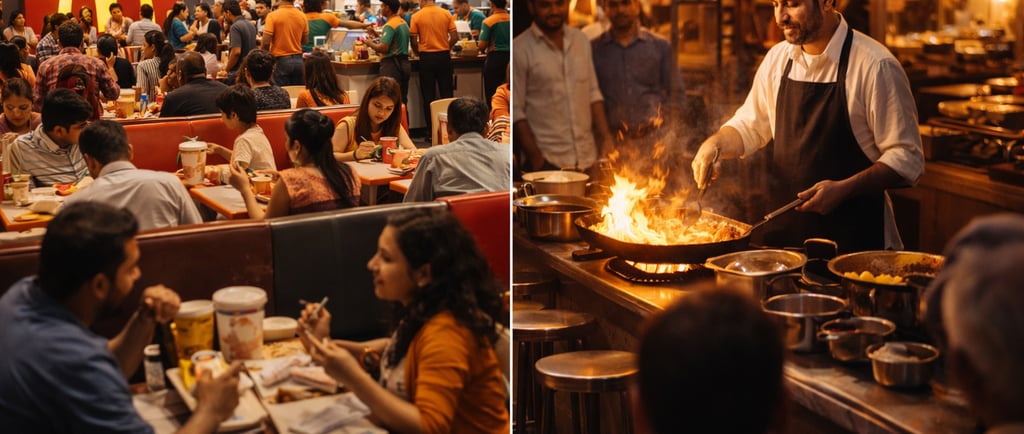
This is a franchise model. McDonald’s does not need every outlet manager to be a genius. The brand does the work. The systems do the work. The customer knows exactly what they are getting, whether they walk into a store in Ahmedabad or Agartala.
Modi spent a decade building this. He did not just campaign for BJP candidates. He made them extensions of himself. The phrase “Modi ka candidate” caught on. The party’s WhatsApp networks, its booth-level workers, its IT cell, its media relationships: all of it was rewired to serve a single, unified brand identity.
Rahul Gandhi did something different. He built a personal transformation.
The Bharat Jodo Yatra was an extraordinary political theatre of modern times. Rahul walked 4,000 kilometres across India, met everyday people, listened more than he spoke, and showed calm in the face of chaos, choosing love over hate. It changed his image. The man who once seemed awkward and privileged now looked grounded and sincere. The beard, the white t-shirt, and his restraint all helped.
But here’s the issue: the Yatra was his personal journey, not the party’s. The idea of “mohabbat ki dukaan” is his message, not Congress’s. The emotional bond he created was with himself, not with the party he leads.
Rahul Gandhi built a brand that feels handcrafted, authentic, and personal. But like most artisanal products, it doesn’t scale up easily.
The Leaky Bucket
In marketing, there’s a term called “brand transfer.” It means that trust built at one level moves to another. When Apple releases a new product, it benefits from years of trust in the Apple brand. The new product doesn’t have to start from zero.
Political parties are expected to work the same way.
Modi’s brand equity transfers fully. It moves from him to the party, to state and district units, to booth workers, and to candidates. Every part of the chain carries the same energy. Even a first-time BJP candidate in a new area can say, “I am Modi’s candidate,” and voters know what that means.
Rahul’s brand equity stops with him.
When a Congress candidate runs in Madhya Pradesh, Rajasthan, or Gujarat, what do they offer? Rahul’s sincerity? His vision? His connection with people? None of that carries over. The candidate can’t say “I am Rahul’s candidate” and have it mean much, because Rahul isn’t the same as Congress, and Congress isn’t the same as Rahul.
The data backs this up. After the Bharat Jodo Yatra, more than half of Rahul Gandhi’s new supporters were not Congress voters. They liked him, but didn’t join the party or maybe didn’t even vote for it. His popularity helped the INDIA bloc allies more than the Congress candidates. State after state, the pattern repeats: Rahul’s rallies attract crowds, his speeches go viral, but Congress still loses.
The bucket has a giant hole in it. Water keeps pouring in. Water keeps leaking out.
The Identity Vacuum
This raises a larger question: what exactly is Congress?
If you ask a voter what the BJP stands for, you’ll get a clear answer: Hindutva, nationalism, development, Modi, strong leadership. You might agree or disagree, but the brand is clear.
But if you ask what Congress stands for, people get confused. Secularism? Welfare? The Gandhi family? Nehru’s legacy? Opposition to Modi? Some vague idea of pluralism? It’s all of these and none of these. The party hasn’t had a clear identity for decades.
Rahul Gandhi has tried to fill this vacuum with his own persona. “Mohabbat ki dukaan” is his attempt to create a counter-brand to the BJP’s politics of anger. Love against hate. Listening against shouting. Humanity against division.
It works for him, but not for the party.
The party lacks the tools to disseminate this message on the ground where it matters. There’s no trained team to deliver it, and no structure that lives it out. Congress’s presence at the booth level has faded in most of the country. State units are divided, and district and block committees are almost gone.
A recent analysis of Congress’s organisational state put it bluntly: “The party’s efforts to build a high-octane social media presence or to mobilise for events, such as political yatras, cannot conceal a stark gap: the erosion of the party’s visible, functioning presence in everyday political life.”
Rahul Gandhi is like a celebrity chef running a restaurant chain that only serves reheated food. The chef is brilliant, but the franchise is broken.
The Substitution Problem
Here’s the irony: the more Rahul’s personal brand succeeds, the more it shows how weak the Congress party’s brand is.
When Modi is popular, the BJP gains. When Rahul is popular, he gains. Sometimes, the Samajwadi Party, the DMK, or Uddhav Thackeray’s Shiv Sena benefit too. The INDIA bloc partners receive additional support, whereas Congress candidates are excluded.
This isn’t by chance. It’s built into the system.
Modi replaced the BJP’s identity with his own. There is no gap between the man and the party. Voting for the BJP is voting for Modi. Voting for Modi is voting for the BJP.
Rahul is competing with Congress’s old identity, the Gandhi family, Nehru’s legacy, and the “grand old party.” He can’t erase this history, and he can’t fully claim it either. So he exists alongside it, sometimes in conflict with it. Voting for Rahul doesn’t always mean voting for Congress, and voting for Congress doesn’t always mean supporting Rahul’s vision.
The result is a split brand. Voters who admire Rahul do not necessarily trust Congress. Voters who traditionally support Congress do not necessarily connect with Rahul’s new positioning. The personal transformation, however genuine, floats above the party like oil on water. It never mixes.
What would be required to fix this?
The honest answer is that it would take more effort than anyone in Congress seems ready to make.
Modi’s franchise model took years to build. It meant making the entire party adhere to a single vision. It required purging or sidelining leaders who did not fit. It required developing systems that could spread the message everywhere, from national television to village WhatsApp groups. It also needed an ideology that every worker could articulate, not just the leader.
Congress would have to do something similar. It would need to define its purpose and get everyone in the party behind that idea. It would have to rebuild its presence at the booth level, not just for elections but as a lasting part of its structure. It would also need to make Rahul’s personal brand and the party brand the same, which means either Congress fully becomes “Rahul’s party” or Rahul fully commits to a renewed (yet to be conceptualised) party identity.
Neither option seems likely. The Gandhi family’s ties to Congress are too complicated for the first, and the party’s internal divisions make the second almost impossible.
So, we’re left with the same situation: a leader whose personal brand keeps growing, a party whose election results keep lagging, and a gap between the two that no number of yatras, speeches, or viral moments can close.
The Ceiling
Rahul Gandhi has done something remarkable. He has transformed his public image against enormous odds, a hostile media environment, and a decade of relentless mockery. He has emerged as a credible voice of opposition, perhaps the only national figure who can confront Modi without blinking.
But being likeable isn’t the same as being electable. Personal popularity doesn’t always turn into votes for the party. The mechanism for transferring that support is broken, and no one seems to know how to fix it.
Modi built a franchise. Rahul built a one-man show.
The franchise wins elections. The solo act wins applause.
Until Congress figures out how to turn one into the other, it will keep winning the narrative and losing the seats. Rahul Gandhi’s rebrand is working. That is precisely the problem.
The chef is celebrated, but the restaurant always stays empty.