
Why the Modi Government Must Urgently Reform Its Crisis Communication Strategy: The Time for Action Is Now
The Modi Government seems to be losing its grip on its most significant asset: communication. As a PollComm strategist, I examine recent communication failures and offer some constructive feedback.
LEADERSHIPPOLITICSCRISISCOMMUNICATION
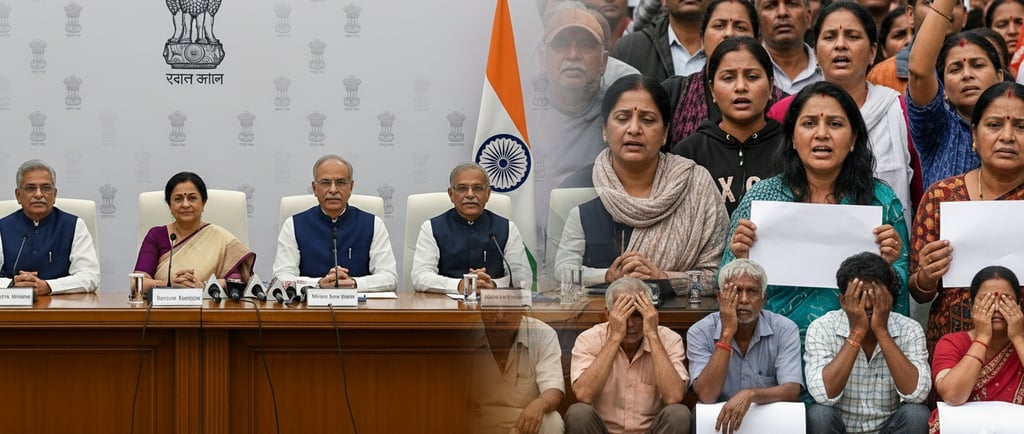
Why the Modi Government Must Urgently Reform Its Crisis Communication Strategy: The Time for Action Is Now
In May 2025, when President Trump claimed credit for brokering the India-Pakistan ceasefire, it took the Modi government several weeks and multiple contradictory statements before finally presenting a unified response. By then, Pakistan had already thanked Trump publicly, India's foreign policy credibility had taken a hit internationally, and domestic opposition had gained ammunition against the government. This pattern of delayed response, contradictory messaging, and defensive posturing has unfortunately become the Modi government's crisis communication playbook, and it's proving increasingly ineffective.
The government's communication machinery, once considered its strongest asset during the 2014 and 2019 elections, has transformed into a significant liability. From the Manipur violence that has raged for nearly two years to the Bihar voter roll controversy, from farmer protests to the Pahalgam terror attack, each crisis reveals a government that appears more focused on controlling narratives than communicating effectively with its citizens.
The Trump Ceasefire Debacle: When Silence Costs Sovereignty
The May 2025 ceasefire controversy exemplifies the core problems with the current approach. Trump's announcement of a "US-mediated ceasefire" between India and Pakistan caught the government completely unprepared. While Pakistan's Prime Minister immediately thanked Trump for his "leadership and proactive role," India's response was fragmented and delayed.
First came silence for hours while social media erupted with speculation and criticism. Then, there was a hasty foreign ministry briefing that made no mention of US involvement, creating more confusion than clarity. This was followed by contradictory statements from different ministries, each trying to control the narrative without coordination. Finally, weeks later, Modi directly contradicted Trump in a phone call, but by then the damage was done.
The narrative that India needs US mediation, which contradicts India's long-standing position on bilateral resolution, had already taken root globally. The Lowy Institute aptly called it a "re-hyphenation challenge," noting that PM Modi faces the risk of India and Pakistan being viewed as conjoined twins in global politics again, undermining years of diplomatic effort to decouple the two nations in international perception.
The Pahalgam Terror Attack: Questions Without Answers
The April 2025 Pahalgam attack that killed 26 civilians, all of them Hindu tourists, presented another communication catastrophe. Despite the Modi government having complete control over Jammu and Kashmir as a Union Territory, the response was marked by confusion and deflection. Home Minister Amit Shah had visited the state just two weeks before, declaring Kashmir "freed from terrorism," yet when tragedy struck, the government's communication strategy crumbled.
Many media outlets reported that credible intelligence had been received about possible attacks. Still, instead of addressing these concerns transparently, the government initially blamed tourists for visiting "without permission." The messaging kept shifting: first denial, then blame-shifting, followed by vague promises of action. When Omar Abdullah and opposition leaders raised legitimate questions about security failures, they were branded as "anti-national" rather than receiving substantive answers.
The irony wasn't lost on anyone when old videos surfaced of Modi, as Gujarat Chief Minister, demanding answers from then Prime Minister Manmohan Singh about terror attacks. The same pointed questions Modi asked then remain unanswered now, but from his own government.
Bihar's SIR Crisis: When ECI's Bureaucratic Language Meets Public Fury
The Special Intensive Revision (SIR) of electoral rolls in Bihar illustrates how technical correctness without emotional intelligence can lead to a communication disaster. The Election Commission's approach involved issuing dense bureaucratic notifications, holding defensive press conferences, and dismissing opposition concerns as "baseless," completely ignoring the genuine fears of millions about potential disenfranchisement.
The crisis escalated because the government failed to acknowledge legitimate concerns about documentation requirements. They didn't explain in simple terms why the exercise was necessary, nor did they reassure vulnerable populations about their voting rights. There was no proactive engagement with community leaders who could have helped calm fears and build understanding.
Instead, when faced with Supreme Court intervention and massive protests, the ECI's response was to conduct an "unofficial survey" that asked leading questions, which appeared more like an attempt to manufacture consent rather than genuine communication. The questions were framed to elicit only supportive responses, further eroding trust.
Manipur: The Price of Prime Ministerial Silence
Perhaps no crisis better illustrates the government's communication failure than the one in Manipur. For over two years, ethnic violence has claimed over 260 lives and displaced 60,000 people. Yet PM Modi has never visited Manipur during the crisis. His only substantial comment came after a viral video showed women being paraded naked, and that was 479 days into the crisis. Even then, he deflected by mentioning violence in opposition-ruled states, diluting the specific horror of what was happening in Manipur.
The state remained under internet shutdown for months, preventing the flow of information and creating an information vacuum filled with rumours and fear. As one Manipuri activist poignantly asked at the White House: "Modi, Biden, are you listening? Is anybody listening?" The silence from the highest levels of government has been deafening, sending a message that some crises and some citizens matter less than others.
The Ethanol Controversy: Technical Arrogance Over Public Concern
When concerns emerged about E20 fuel damaging vehicles and reducing mileage, the Petroleum Ministry's response was a masterclass in how not to communicate with citizens. They dismissed concerns with technical jargon about "octane numbers" and "volumetric efficiency" that meant nothing to the average vehicle owner worried about their investment.
The ministry essentially blamed vehicle owners for not maintaining their vehicles properly, completely failing to acknowledge the legitimate worry about paying the same price for diluted fuel. They ignored broader environmental and food security concerns about diverting food grains for fuel production. The direct involvement of Nitin Gadkari's family in the Ethanol business, coupled with his push for higher Ethanol blending in fuel, added more fuel to the fire. The message to citizens was clear: the government knows better, and your concerns are invalid. As I write this, the issue persists.
Learning from Ukraine: How Zelensky Mastered Crisis Communication
The contrast with Ukraine's war communication strategy under President Zelensky offers valuable lessons. Facing an existential crisis far greater than any India has recently confronted, Ukraine has managed to maintain domestic morale and international support through masterful crisis communication.
Zelensky appears regularly, not just during scheduled addresses, but whenever the situation demands it. He speaks in simple, yet emotionally charged language that resonates with ordinary people while maintaining gravitas. When Ukrainian cities are attacked, he's online within hours, sometimes minutes, acknowledging the pain, explaining the response, and maintaining hope. He doesn't hide behind bureaucratic language or delayed press releases.
Most importantly, Ukraine has mastered the art of controlling narrative without appearing controlling. They acknowledge setbacks honestly, which paradoxically increases trust during successes. When they don't have information, they say so. When they make mistakes, they admit them quickly and move forward. This approach has kept Ukrainian society unified and maintained steady international support despite war fatigue.
India could adapt these lessons to its own context. Regular high-level communication during crises, honest acknowledgement of challenges, and emotional connection with affected populations would transform crisis response. The goal isn't to copy Ukraine but to understand that modern crisis communication requires speed, authenticity, and genuine engagement.
How the Opposition Exploited Communication Gaps
The opposition has become increasingly sophisticated at exploiting the government's communication failures, turning each crisis into a sustained political campaign. During the farmer protests, Congress and other parties filled the communication vacuum left by the government's silence, positioning themselves as the voice of farmers. In contrast, the government appeared distant and uncaring.
Rahul Gandhi's transformation from a much-mocked politician to a more credible opposition voice has been built partly on simply showing up where the government doesn't. When PM Modi didn't visit Manipur, Gandhi went. When the government dismissed farmers' concerns, Gandhi sat with them. The opposition doesn't need to offer solutions; they need to be present and empathetic where the government appears absent and indifferent.
The AAP in Delhi has been particularly effective at exploiting communication gaps, using social media to amplify every government communication failure. Their rapid response teams monitor government statements and immediately highlight contradictions, delays, or insensitive remarks. They've turned the government's communication weakness into their political strength.
Regional parties have also learned to fill local communication vacuums. In Bengal, Mamata Banerjee's constant presence during cyclones contrasts with the central government's distant bureaucratic responses. In Tamil Nadu, the DMK highlights every instance where the centre's poor communication affects state interests. These parties understand that in politics, perception matters as much as reality, and they're winning the perception battle.
Why The Current Model Fails
Modi's transformation from a communicative campaigner to a silent statesman mirrors Manmohan Singh's trajectory, which is deeply ironic given Modi's past criticism of Singh's communication style. The belief that silence projects strength during crises is proving catastrophically wrong in the age of round-the-clock news coverage and social media amplification.
The centralisation of communication authority means local officials and even ministers cannot respond quickly to emerging crises. By the time approval comes from the PMO, opponents or social media have already set the narrative. This bottleneck creates dangerous delays when speed is essential.
The government's default mode is denial and deflection rather than acknowledgement and action. This defensive posture exacerbates every crisis, as seen in the farmer protests, where the initial dismissal of concerns as "misinformation" hardened positions on both sides and prolonged the agitation.
From calling protesting farmers "andolanjeevis" to dismissing Manipur's crisis as mere "ethnic clashes," the language lacks basic empathy. Citizens in crisis need compassion, not condescension. The technocratic approach may be effective for policy announcements, but it fails completely during emotional crises.
A Preferred Crisis Communication Framework
The government needs to establish a permanent National Crisis Communication Cell that operates 24/7. This body should monitor emerging issues, assess crisis potential rapidly, coordinate responses across ministries, and most importantly, have the authority to issue immediate responses without waiting for PMO approval for defined crisis types.
Within the first hour of any crisis, which I refer to as the "Golden Hour Protocol," the government should publicly acknowledge the situation, express concern for those affected, commit to an investigation or action, and provide a timeline for the next update. This simple framework would prevent most communication crises from spiralling out of control.
Admitting when you don't have complete information isn't a weakness; it's an act of honesty that builds trust. The government needs to acknowledge mistakes promptly when they occur, share the rationale behind decision-making, even for difficult choices, and accept legitimate criticism without defensiveness. This radical transparency may seem risky, but it fosters long-term credibility, making crisis management easier.
PM Modi's communication skills remain his most significant political asset, yet they stay unused during crises. He must address the nation during major crises beyond his monthly Mann Ki Baat radio programme. Visiting affected areas promptly, engaging directly with affected communities, and demonstrating visible leadership rather than distant statesmanship would transform crisis response.
Different crises need different approaches. Security crises require immediate addresses from the Prime Minister or Home Minister with regular briefings. Natural disasters require a visible presence and effective coordination on the ground. Social tensions require empathy first, inclusive language, and community engagement. Economic issues need clear explanation, acknowledgement of pain, and a concrete roadmap forward.
Crisis communication only works if there's pre-existing trust. Regular engagement with media beyond friendly outlets, accessibility of ministers for genuine questioning, predictable communication patterns citizens can rely on, and consistent messaging across party and government would create a foundation of trust that makes crisis communication credible.
It's Time to Take Immediate Action
The government should immediately appoint a Chief Crisis Communication Officer (I offer my candidature for this position; you know how to reach me). This individual would report directly to the PMO and have the authority to coordinate across ministries and departments. Establishing Regional Crisis Communication Centres in each zone, with local language capability and cultural sensitivity, would ensure that local nuances are not lost in national messaging.
Enhancing the current Digital War Room for constant monitoring and rapid response to emerging narratives is essential in the social media age. This should be complemented by a comprehensive Crisis Communication Playbook with specific protocols for different crisis types, ensuring consistency regardless of who's handling the crisis.
All ministers and spokespersons need fresh training in crisis communication, empathy, and modern media management. This isn't about spin, but about effective and compassionate communication. A Rapid Response Team of subject experts who can provide technical clarity during crises would prevent the kind of confusion seen during the ethanol controversy.
The government should implement Communication Impact Assessments for all major policy decisions, anticipating and preparing for potential communication challenges that may arise. Building bridges with critics by engaging constructively with opposition and civil society during peacetime creates goodwill that's invaluable during crises.
Establishing feedback mechanisms to understand how crisis communication is being received would help refine approaches in real-time. Regular crisis simulation exercises would test and refine response protocols before real crises hit.
The Political and International Stakes
The 2024 election results, in which the BJP lost its majority, illustrate the political cost of ineffective crisis communication. In Maharashtra, the party lost 14 seats, dropping from 23 to 9. In Punjab and Haryana, farmers' anger translated directly to electoral defeats. The opposition successfully portrayed the government as arrogant and out of touch, a perception significantly fueled by communication failures.
Each botched crisis response erodes the Prime Minister's personal brand, emboldens opposition narratives, alienates fence-sitters, and disappoints even supporters. As one former Modi supporter noted on Twitter: "Today, even some die-hard Modi supporters have started comparing Narendra Modi with Dr. Manmohan Singh. This comparison speaks volumes about the terrible media strategy."
Poor crisis communication also damages India's global standing. The Trump ceasefire episode made India look weak and confused on the world stage. The Manipur violence, met with European Parliament resolutions and international human rights criticism, tarnishes India's democratic credentials. For a nation aspiring to great power status and permanent membership on the UN Security Council, crisis communication competence isn't optional but essential.
The Path Forward
The Modi government faces a clear choice between continuing with a failing crisis communication model that damages both governance and politics, or embracing reform that rebuilds trust and enhances effectiveness. The irony is striking that a Prime Minister who built his political career on extraordinary communication skills now leads a government that repeatedly fails at basic crisis communication.
Crisis communication isn't about spin or propaganda. It's about respecting citizens enough to engage with them honestly during difficult times. It's about having the confidence to admit uncertainty and the courage to show vulnerability. It's about understanding that in a democracy, silence isn't golden but potentially catastrophic.
The government's current approach of treating each crisis as a PR problem to be managed rather than a communication opportunity to build trust is unsustainable. In an era of instant information, social media amplification, and heightened public expectations, crisis communication competence is no longer a luxury but a necessity for governance survival.
The question isn't whether the Modi government will reform its crisis communication but whether it will do so before the next crisis makes reform irrelevant. The clock is ticking, and India is listening. The real question is: is the government?
Note: This analysis is based on publicly available information and media reports. The recommendations are offered in the spirit of constructive criticism aimed at improving governance communication for the benefit of all Indians. Trolls, please excuse.