
The Budget Line Is the Ballot Box
The first Aadhaar number was issued in Nandurbar in September 2010. The 83,000th shakha was counted in March 2025. Somewhere between those two dates, the budget line and the ballot box became the same line. The closing piece of the Invisible Machines series, written from inside the machine.
ECONOMYPOLITICAL INFRASTRUCTUREELECTIONSPOLITICSINVISIBLE MACHINESTHE INVISIBLE MACHINES SERIESDEMOCRACYPOLITICAL STRATEGYWELFARE POLITICSMONEY IN POLITICSGOVERNANCE
This is the last part of a six-part series about the invisible machines that shape Indian democracy.
The first Aadhaar number was given out in a tribal village in Nandurbar in September 2010. By March 2025, the 83,000th shakha had been counted. Somewhere between those two dates, the budget line and the ballot box became the same line.
I have worked in this field for thirty years. When I started in the early nineties, campaigns relied on ground networks, printing presses, a few jeeps, and candidates who spent more time with people than with data. The Sangh had about 30,000 shakhas, and Congress controlled most major states. Voter lists were on paper. Welfare was mostly grain, not cash, given out through ration shops and panchayats. There was no Aadhaar, no Direct Benefit Transfer, and no consultancy industry. We were called advertising agents or public relations managers. Most voters did not know what the Election Commission did.
Since then, I have not seen just separate changes. Instead, I have seen one big machine come together, built openly by people who thought they were each working on something smaller and different.
The enrolment camps started first, early in the last decade. I remember a Collector telling me that the poor would now be seen as numbers rather than names, so there would be no discrimination. It seemed efficient. The benefit-transfer pilot began in fifty-one districts in late 2012, under the previous government, with support from all sides. The idea was that cash would reach people more directly than grain, and that was true. But no one said openly that once welfare runs on a single digital system tied to a single number, that system can be used for other things, too.
The shakhas went from forty thousand in 2014 to fifty-one thousand the next year, to sixty thousand by 2020, to seventy-three thousand by early 2024, to eighty-three thousand a year later. The consultancy industry began around the 2014 campaign and grew to hundreds of firms over the next ten years. Schemes began to carry leaders' names, like Pradhan Mantri this or Mukhyamantri that. The Election Commission, once mostly ignored by voters, became the centre of debate during Bengal's roll revision. The Governor's office became a major political tool outside the party. The Speaker's chamber became the place where defections were legitimised. Agencies started to set the cost of staying in opposition and the reward for switching sides.
Let me be clear about my position. I run a political communications firm that competes with the companies I mentioned earlier in this series. Much of what I describe is part of my own work. I have not observed this machine from afar. I have helped build parts of it for clients who wanted exactly that. So, what follows is a report from inside, not an outsider's view. I believe honesty is better than pretending to be above it all.
The machine
Five institutions shape the outcome of Indian elections. We often think of them as separate stories, but really, they are parts of one machine seen from different angles.
Let's start with the Election Commission, which sets the rules for everything else. In Bengal, the roll revision removed about 91 lakh names, or about one in eight voters, with 27 lakh still disputed when voting began. An election is not just one event. It is a long process, from drawing boundaries to registering voters to counting results. If you change the voter list at the start, nothing else can be truly fair. The Supreme Court reviewed the revision in late May and found it constitutional, calling it a proper cleaning of the rolls. The oversight that was supposed to check the Commission has now become part of the machine. These institutions now absorb the very checks that were meant to limit them.
The Governor's office acts as both a brake and a holding area for the machine. It can slow down a state government it opposes by delaying bills, or help a friendly one by quickly dissolving the assembly and swearing in new leaders. R. N. Ravi, for example, spent four years opposing the elected government in Tamil Nadu, delaying bills so long that the Supreme Court called it an unconstitutional veto. He was then moved to Bengal to swear in the new Chief Minister. The Governor's discretion is allowed by the Constitution, but how it is used depends on timing, which is political. The Raj Bhavan was once just ceremonial, but now it plays an active role.
The Speaker's chamber is where the machine turns numbers into legitimacy. It is the place where a defection becomes an official split, and where the math of who switched sides is turned into legal form. In early 2024, the Maharashtra Speaker decided that the breakaway group was the real Shiv Sena because it had the numbers, thereby reopening the very loophole the anti-defection law was meant to close. The law gave a judge's job to a political appointee forty years ago, and everyone has known about this flaw for decades, but nothing has changed because the flaw is useful. Bengal in 2026 is using the same approach. The real decisions happen in the Speaker's room, not in any party's rules.
The agencies set the cost of your choices. From 2014 to 2023, the Enforcement Directorate opened cases against 121 politicians, and 115 of them were from the opposition. That is ninety-five per cent. These cases often go quiet if the accused switches sides. No convictions are needed for this to work. Politicians just need to see the cost of being in the wrong camp and the benefit of joining the right one. The raid on a political consultancy in Kolkata in early 2026, just before the elections, sent the same message again.
Welfare is the base that supports everything else. The Aadhaar system, started by the last government and greatly expanded by this one, now holds over one and a half billion numbers and does about nine and a half crore identity checks each day. This same system handles payments for Kisan Samman, Lakhpati Didi, Ladki Bahin, Lakshmir Bhandar, housing aid, and the rural work scheme that replaced the old job guarantee last year. That change quietly shifted a right people could demand into a benefit they are given, and added a sixty-day shutdown during the farming season. The important point is this: the system that pays a beneficiary is also the one that removes her if her fingerprint does not match. Both actions happen on the same system. About 39 lakh names were taken off the rural work rolls in one year, and over 8 crore in two years. Experts believe that one in seven of these deletions is simply a mistake.
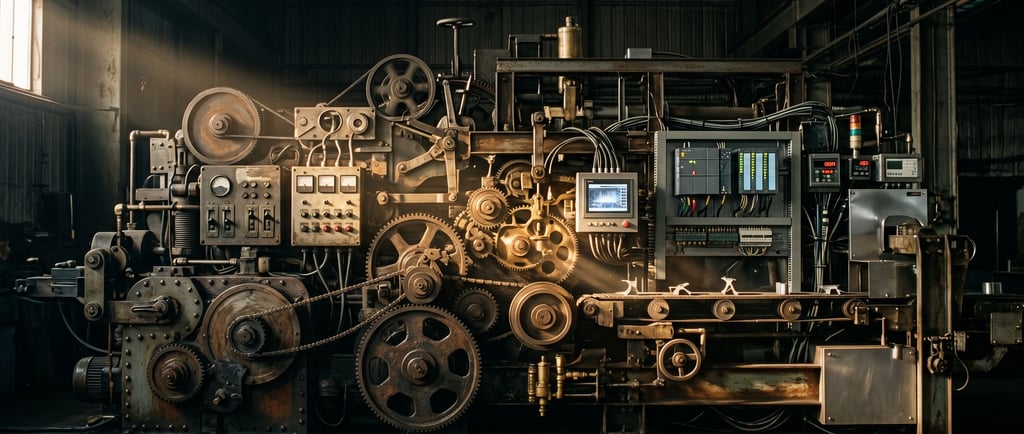
There are five institutions, each with its own job. One sets the rules. One controls timing. One handles defections. One sets the price of loyalty. One provides or withholds welfare. Each does only its own task. None were designed to work together, but when no one is watching, the whole forms a single machine.
What the machine makes
The machine creates a certain kind of citizen. In our field, we now call her the labharthi, or beneficiary. This word has become central to our work over the past ten years, and the change it represents is real. A generation ago, the state dealt with citizens who had rights it had to respect. Now, it deals with beneficiaries who receive what the leader chooses to give. The same woman is a taxpayer, a voter, and a name in a database that an office she will never visit can erase. Citizen, beneficiary, voter, all in the same file. I called this the techno-patrimonial state in Part 4: new technology creating a very old relationship between the giver and the one who waits.
The machine also shapes a particular kind of economy, which is important to consider because it shows that the story is not just about politics.
Surjit Bhalla, an economist who was close to this government, put it simply recently: the party is winning every election but losing the economy. The numbers back him up. In the past decade, India's per capita growth in dollars ranked sixteenth in the world, behind Bangladesh and Ethiopia. The number of quality-control orders, meant to ensure quality but mostly protecting a few favoured firms, rose from under 90 in 2017 to over 760 by 2024. The rupee has kept falling. His main point is worth remembering: elections bring power, but only good policy brings prosperity.
The link between winning every election and failing to fix problems is no coincidence. Winning is comfortable, and comfort reduces the desire for reform. Why risk making changes when welfare support keeps voters from letting their economic frustrations affect their vote? The labharthi thanks the leader for the benefit. The state pays for these transfers without creating the growth that a more competitive system would require. So, the machine protects the party from the results of its own economic record, which means there is no pressure to improve.
There is a deeper issue I have seen from the inside that most reform discussions miss. Governments think reform is about making announcements. It is not. Real reform is about what you stop doing. As Arvind Subramanian, a former Chief Economic Adviser of this very government, has argued, you can lower taxes on Monday but still favour a few big business houses, target your opponents' supporters with agencies, and withhold funds from states that voted against you. Global investors quietly notice these actions more than the announcements. They see where the real risks are. This is why there are many announcements but little private investment. Corporate investment was about seventeen per cent of national income at the start of the century, but now it is about half that. The reforms look real on paper, but the real problem is the habit of using every institution to hold onto power. That habit is not a flaw; it is how the machine is meant to work.
So, the two complaints after the May results that the state has turned citizens into beneficiaries, and that the country is winning elections but losing its economic future, are really the same issue. The machine that creates the labharthi also protects the party from facing the reality of the labharthi's future. The party cannot reform because reform means taking electoral risks, and the whole machine is built to avoid that. Reform and the machine are at odds.
What happens now
The machine is now operating at full strength, and the next big test will be in Uttar Pradesh in 2027. There are 80 Lok Sabha seats, 403 assembly seats, a large Muslim population, and a complex caste map. The opposition's starting point is the 2024 result, in which the Samajwadi Party won 37 seats and the BJP 33. Whether that result holds up against the full force of the machine, with revised rolls, an active Raj Bhavan, a willing Speaker, agencies ready, and welfare systems in place, will show if May 2026 was the peak or a turning point.
Then 2029. The opposition that walked out of the May 2026 storm is smaller, more divided, and leaning harder on the Congress's leftover structure than it was when these parties gathered in Patna in 2023. The machine keeps working between elections. Shakhas continue to meet, schemes keep paying out, databases are updated, agencies file cases, and offices remain open.
The machine will not reform itself. The ruling party has no reason to change, and the opposition has not built the support needed to unite the sixty per cent of voters who are not with the ruling party. The reform talk in the courts, the columns, and the retired officials' speeches have produced petitions and no laws. The flaw in the defection law remains. The Governor's discretion remains. The Commission's independence is still debated and unchanged. The welfare system and the shakha network both continue to grow.
I am not going to hand you a list of reforms. Plenty of people whose job it is, senior lawyers, retired judges, former Election Commissioners, have already written the proposals that would change things if anyone adopted them. After thirty years inside this and six pieces describing it, I think my job is different. My job is to tell you what is there. The reforms are someone else's chapter. The diagnosis is mine.
Here is my diagnosis: this machine is not just a phase or an accident. It is something that has been built over time. The last government started some parts, and this one expanded most of them. Many people, including my clients and competitors, helped build it without realising they were creating a single machine. Each person solved their own problem, and each solution made sense on its own. The machine is the result of all these small, correct decisions when no one is looking at the bigger picture.
Thirty years is enough time to see it all come together. It is also enough to know that once you have seen something, you cannot unsee it, and what you cannot unsee shapes what you do next.
These machines now have a name, a shape, and a logic. This series has tried to make them visible. It is up to everyone who has read this far to keep them in view.
The machines remain invisible only until you choose to see them. After that, they are just machines.
This is the closing piece of the Invisible Machines series. By clicking here, you can read Part 1, Part 2, Part 3, the standalone Bengal piece, Part 4, and Part 5.