
The Grip, the Choke, and the Follow-Through
Rahul Gandhi walked into Parliament, explained how a chokehold works, accused the Prime Minister of surrendering India, dropped the Epstein files, and walked out. The BJP spent 72 hours reacting. Not leading. Reacting. One speech does not win elections. But it tells you someone is finally learning how.
RAHUL GANDHILEADERSHIPBJPNARENDRA MODIPOLITICSBRANDINGCONGRESSCOMMUNICATIONPARLIAMENT
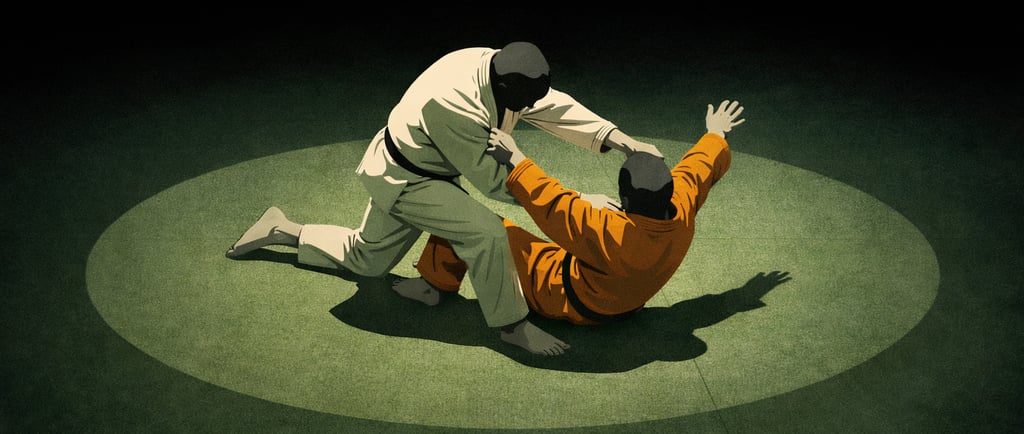
What Rahul Gandhi's jujitsu speech reveals about who is learning faster in Indian politics.
A couple of days ago, I wrote an article arguing that Rahul Gandhi's rebrand had worked but hadn't solved his real problem. The rebrand made Rahul likeable. It did not make Congress voteable. He was a solo act performing brilliantly in a franchise era. The personal brand was rising. The party brand was stuck.
I still believe that. However, an unexpected event in Parliament on February 11, 2026, necessitated an update to that diagnosis.
Rahul Gandhi delivered what may be the most strategically constructed speech of his parliamentary career. Not his most passionate; he has done passionate before. Not his most emotional; Bharat Jodo gave him that. This was different. This was calculated. And that is what makes it worth examining.
The Setup
Let's look at what Rahul did, setting aside all ideology and analysing it purely as communication.
He started with some light conversation. Kiren Rijiju had once complimented his fitness, and Rahul brought that up. "I practice jujitsu and martial arts," he said, and then, with the casualness of someone explaining a hobby, walked the House through how a fight works.
"The foundation of martial arts starts with the grip. Without the grip, nothing happens. First comes the grip, then the second grip, and then it leads to the choke. The choke focuses on the neck and secures control. At one point, you can see it in the opponent's eyes, and he knows that he has lost the game, and then he taps and surrenders."
He paused. "Grip, choke and tap; you can see it in jujitsu, but not in politics."
Then he pivoted. He cited the government's own Economic Survey, not opposition research, not a think tank report, but the Finance Ministry's own document to argue that the world is moving from stability to instability, that energy and finance are being weaponised, and that India needs to protect four things above all: its people, their data, its food supply, and its energy security.
And then he said the government had surrendered all four in the India-US trade deal.
He strategically named Hardeep Singh Puri and the Epstein files. He named Anil Ambani. The Chair intervened. He backed off gracefully, "In the interest of our conversation, I won't mention Epstein, Anil Ambani, or the others", which, of course, ensured that everyone who was watching him speak remembers those names.
He framed the entire Budget, the entire trade deal, and the entire government as a man being choked into submission. "I know the PM won't sell India under normal circumstances. He has sold India because they are choking him. I said when you choke, you see fear in the eyes. You can see it in the PM's eyes."
And then he walked out.
The Reaction
This is where it gets interesting for someone in my profession.
Within hours, the BJP was reacting. Not leading. Reacting.
Kiren Rijiju called the speech "full of lies." Hardeep Singh Puri was forced to host a press conference (which, by the way, was widely claimed as disastrous on many counts) explaining that he had met Epstein only "three or at max four times" through an International Peace Institute delegation. Union Minister Pralhad Joshi called Rahul "an immature part-time politician." BJP MP Nishikant Dubey filed a substantive motion demanding Rahul's Lok Sabha membership be cancelled and a lifetime ban on contesting elections. He accused Rahul of links with the Soros Foundation, the Ford Foundation, and USAID. He called him part of a "thuggery gang to destabilise India from within."
Priyanka Gandhi mocked it. KC Venugopal reminded reporters that the last time they tried to cancel Rahul's membership, "the people gave him more votes than PM Modi got."
And Rahul? Rahul posted a video: "File an FIR, bring a privilege motion. It doesn't matter. I have spoken the truth in Parliament."
By Friday, the government had withdrawn its motion and was allowing Dubey's motion to proceed. The Budget session was coming to an end, and the dominant story of the entire session was not the ₹583,000 crore budget, not the infrastructure push, not the Finance Minister's speech or reply. It was Rahul's speech. The jujitsu metaphor. The choke. The Epstein names. The "sold Bharat Mata" line.
For 72 hours, the BJP responded to Rahul Gandhi's framing. Not the other way around.
The Shift
I want to be precise about what I am arguing here. I am not saying Rahul is right about the trade deal. I am not saying the Epstein allegations have substance. I am not saying the government has surrendered India's interests. These are political claims, and political claims are for voters to judge.
What I am saying is that from a communication perspective, something has shifted.
For a decade, the BJP controlled the frame. They decided what the country talked about. They chose the battlefield, the language, and the timing. The opposition responded. Always late. Always defensive. Always explaining rather than accusing.
Rahul's jujitsu speech reversed this, at least for a session.
Consider the technique. He used the government's own Economic Survey as his foundation, which made it impossible to dismiss the premise without dismissing the Finance Ministry. He dropped explosive names (Epstein, Puri, Ambani) and then withdrew them voluntarily, which meant the names were in every headline, but he could not be accused of defying the Chair. He turned a complicated trade framework into a simple story: a man being choked into surrender. You do not need an economics degree to understand a chokehold. Your grandmother understands a chokehold.
And then he left. He did not stay for the rebuttal. He did not engage with the counterarguments. He allowed the frame to harden while the government spent two days attempting to break it.
This is not the old Rahul. The old Rahul would have stayed, argued back, been interrupted, lost his temper or his thread, and given the BJP enough footage for ten attack videos. The new Rahul sets the fire and walks away.
The Irony
Here is what amuses me as someone who studies political communication for a living.
In a piece I am publishing next week called "If India Were My Client," I argue that our government is the best domestic communicator in the democratic world. Still, it is losing the international narrative because it responds too slowly, treats silence as a strategy, and allows the other side to define the story.
I offer five recommendations. Speak first. Stop treating silence as a strategy. Create your own narrative before someone else does. Frame outcomes as your success. Use surrogates.
Rahul Gandhi, whether by instinct or by design, applied every one of these principles domestically in the jujitsu speech against the very government I will be advising to use them internationally.
He spoke first. He framed the trade deal before the government could defend it. He created a narrative (choke and surrender) that was more vivid than any policy rebuttal. He used surrogates (Priyanka, Venugopal) to maintain the attack while he stepped back. And the BJP, the most formidable communication machine in Indian politics, spent 72 hours reacting to someone else's frame.
The government that controls every domestic narrative was caught in a narrative set by someone else. The party that always sets the agenda found itself on the back foot, explaining, denying, threatening expunction, filing motions, all of which only amplified the original story.
The Limits
Now let me pour some cold water. Because I wrote the rebrand piece, and I still stand by its central diagnosis.
Rahul Gandhi delivered a brilliant parliamentary performance. The question is: does it matter outside Parliament?
Modi's communication dominance was never built on parliamentary speeches. It was built on rallies, social media, Mann Ki Baat, WhatsApp forwards, friendly television anchors, and a party machinery that translates the leader's messaging to every booth in the country. The BJP's communication chain runs from the PM's office to the last party worker in the last village in the last constituency.
Rahul does not have this chain. He has Parliament, press conferences, social media, and the occasional yatra. That is a powerful set of tools for a leader, but it is not a communication infrastructure for a party.
The farmer in Madhya Pradesh who votes for the BJP is unlikely to watch a 45-minute Lok Sabha speech. He will receive a WhatsApp forward of the BJP's counter — "Rahul called Bharat Mata a sellout" — without any context, the jujitsu metaphor, or the Economic Survey citations. The BJP has spent a decade building a translation layer between Parliament and the voter. Congress has not.
This was the problem I identified in the rebrand piece: the franchise versus the solo act. Rahul's rebrand made him better. It did not make Congress better. The jujitsu speech confirms this. One man in one House for one session can dominate the narrative. But elections are not won in Parliament. They are won at the booth. And at the booth, it is not Rahul's name on the ballot in 500 constituencies. It is a Congress candidate who carries none of this new equity.
What I Am Watching
From a professional standpoint, the jujitsu speech interests me for one reason above all others. It suggests that someone in Indian opposition politics is studying communication as a discipline, not just practising it as an instinct.
The old Rahul was instinctive. Sometimes the instincts were good (Bharat Jodo). Sometimes they were terrible (temple-hopping before elections, the mishandling of disqualification). There was no system. No consistency. No architecture.
The jujitsu speech had architecture. The setup, the pivot, the escalation, the controlled withdrawal, the walkout, the post-speech positioning; this is a planned sequence. It is not spontaneous. Someone thought about where the cameras would be, what the headlines would say, how the government would react, and how to exploit the reaction.
This does not mean Rahul has solved the transfer problem. It does not mean Congress will suddenly start winning elections. It does not even mean the next speech will be as effective. One speech is a data point, not a trend.
But it does mean something is evolving. Whether it is Rahul himself, or his advisors, or simply the accumulated learning of a decade of defeats, the opposition's communication approach is showing signs of becoming strategic rather than merely reactive.
And that matters. Because in Indian politics today, the communication gap between the BJP and everyone else is wider than the policy gap, the ideology gap, or even the money gap. If the opposition learns to communicate, not just argue, but communicate, the political landscape changes.
We are not there yet. But the jujitsu speech was a glimpse of what "there" might look like. Whether the opposition can build on it, or whether it remains an isolated performance from a gifted solo act, is the question that will define the next three years.